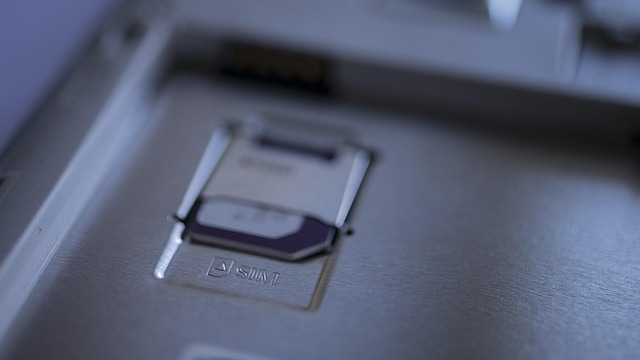
Every year, a fairly large number of people arrive in Germany, try to get a prepaid SIM card at a supermarket or electronics store, and are confused to find that they cannot simply hand over cash and walk out with a working number. The reason is the Telekommunikationsgesetz, specifically the identity verification requirement that applies to all SIM cards issued in Germany since 2017.
What the law requires
German law requires that every SIM card registration be linked to a verified identity document. This is not a voluntary process and carriers cannot waive it. The verification has to happen before the SIM is activated, which is why you cannot buy a prepaid card, stick it in your phone, and start calling — the card will work for emergency calls only until the registration clears.
The accepted documents are a valid passport or a national identity card from an EU or EEA country. A driving licence alone is not sufficient. If you have a residence permit (Aufenthaltstitel), you can present that together with your passport.
How verification actually works
There are two main routes: in-store verification and PostIdent. The experience differs considerably.
In-store verification happens at the point of purchase. A staff member checks your ID, enters your details into the carrier's system, and the registration goes through while you wait. This is available at Telekom, Vodafone, and o2 stores, as well as some MediaMarkt and Saturn locations that stock carrier-branded SIMs. Discount carriers like Aldi Talk or Lidl Connect typically use PostIdent instead.
PostIdent means you buy the SIM, receive an activation code, and then take your ID to a Deutsche Post branch to have it scanned and submitted. The SIM activates within 24 hours of the PostIdent appointment being processed. Deutsche Post branches are widespread, but you need to go during opening hours, which can be inconvenient if you have a normal working week.
What to bring
For any in-store purchase: your passport or EU national ID, your German address (you will need to provide a street address for registration purposes), and payment. Cards are accepted everywhere; cash at most stores.
If you have not yet registered your address in Germany (Anmeldung), you can still get a SIM using a friend's address or your employer's address. The registration address is for the carrier's records and does not affect what number you get.
Carrier choice at the prepaid level
Germany's network infrastructure is operated by Telekom, Vodafone, and Telefónica (o2). Every other carrier uses one of those three networks under an MVNO arrangement. Telekom has the widest rural coverage. Vodafone is roughly equivalent in cities but more variable outside them. o2 has improved considerably but still has gaps in parts of Bavaria and the eastern Länder.
For a prepaid card, the practical difference between Telekom's own brand and an MVNO running on Telekom's network is usually in the throttling policy after you exhaust your data allowance, and in roaming terms within the EU. MVNOs are often significantly cheaper but may deprioritize your traffic during peak hours.
Timeline
In-store with direct verification: the SIM is usually active within an hour, sometimes faster. PostIdent: activation happens the business day after the Post appointment is processed, which can mean 24–48 hours in practice. Neither carrier will activate a card without the verification step completing.